


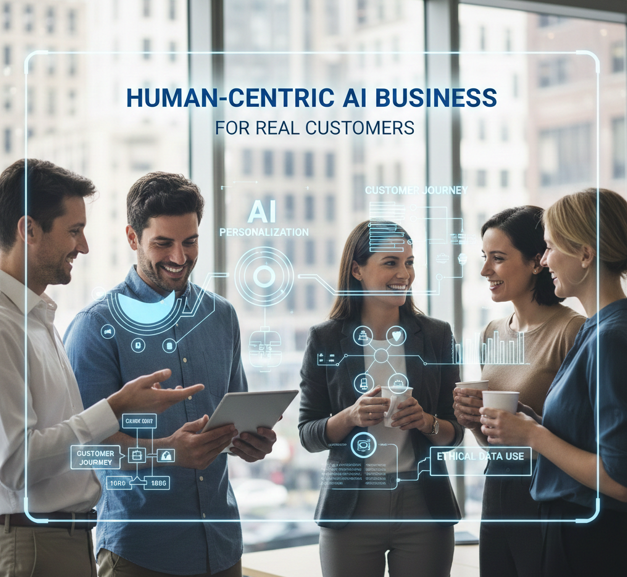
By 2026, business success is no longer defined by simple digital transformation, it now depends on how well companies integrate intelligent AI agents into everyday operations. However, the most resilient organizations aren’t just adopting automation; they are redesigning workflows around a truly human-centric AI business model. In an increasingly automated marketplace, the real competitive advantage comes from blending powerful automation with genuine human authenticity building deeper trust with customers, employees, and stakeholders alike.
Human-Centric AI business In 2026
In the global economy of 2026, a human-centric AI business is defined by AI-augmented decision-making, real-time data insights, and a marketplace that seamlessly blends physical and digital interactions into a true “phygital” environment. The companies that thrive are not those that merely deploy new AI tools, but those that redesign their workflows so human judgment is strengthened—rather than replaced—by intelligent systems.
In this environment:
-
Customers expect hyper-personalized, context-aware interactions across both online and offline touchpoints.
-
Teams operate in hybrid, distributed structures that rely heavily on collaboration platforms and AI assistants.
-
Leaders are judged not just on profitability, but on how they balance innovation with responsibility, privacy, fairness and sustainability.
The Foundation: Small Business vs Enterprise Scaling
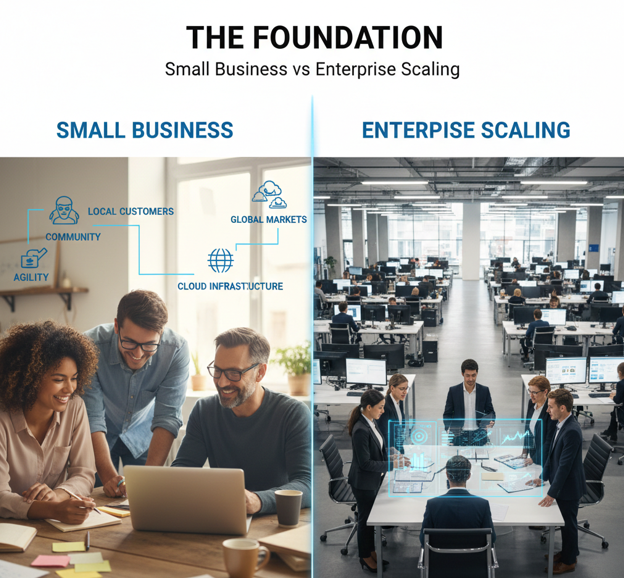
In the mid-2020s, the difference between small businesses and large enterprises is no longer just about size—it’s about systems, governance, and scalability. Small businesses tend to move faster and experiment more freely, while enterprises operate with deeper capital reserves, more complex structures, and greater regulatory responsibilities.
Key foundational contrasts:
1. Small Businesses
Small businesses rely on lean teams, flexible roles, and rapid experimentation. They typically adopt off-the-shelf SaaS and AI tools to manage marketing, finance, HR, and daily operations. Their competitive advantage often comes from focusing on niche markets, building strong customer relationships, and executing quickly.
2. Enterprises
Enterprises, on the other hand, implement robust governance, risk management, and compliance frameworks. They often build or heavily customize AI systems that integrate across multiple business units and geographic regions. Their growth usually scales through acquisitions, global supply chains, and strong institutional investor networks.
In both cases, the real challenge is not simply acquiring new technology—it is executing with discipline. Clear strategy, measurable goals, and the ability to adapt as regulations and customer expectations evolve ultimately determine long-term success.
Scaling In The Mid‑2020s
In 2026, scaling a business is less about increasing headcount or expanding physical locations and more about building resilience from day one. Modern organizations scale by designing systems that can grow efficiently, adapt quickly, and remain stable during market shifts. Instead of relying solely on manpower, they focus on three core pillars:
Process Standardization: Clear, documented workflows, playbooks, and knowledge bases that can be easily understood and executed by both human teams and AI agents. This ensures consistency, faster onboarding, and reduced operational errors.
Data Infrastructure: Clean, well-structured data that powers analytics, automation, and predictive decision-making. Strong data foundations allow businesses to make smarter, faster choices as they scale.
Platform Ecosystems: Seamless integrations across CRM, ERP, communication, and project management tools to reduce friction, eliminate duplication, and improve cross-team collaboration.
How Small Businesses Prepare for Scale:
-
Implement lightweight yet reliable financial, legal, and HR systems early to avoid operational chaos later.
-
Build brand equity and audience assets that are not dependent on a single platform, channel, or algorithm.
-
Use AI to extend team capabilities strategically, instead of over-hiring before sustainable growth is achieved.
How Enterprises Maintain Agility While Scaling:
-
Establish internal “startup-style” innovation units that operate with autonomy and rapid experimentation cycles.
-
Empower cross-functional teams to launch and iterate on new products without excessive bureaucracy.
-
Apply AI to streamline legacy processes and extract untapped value from existing organizational data.
Financial Literacy And Modern Funding
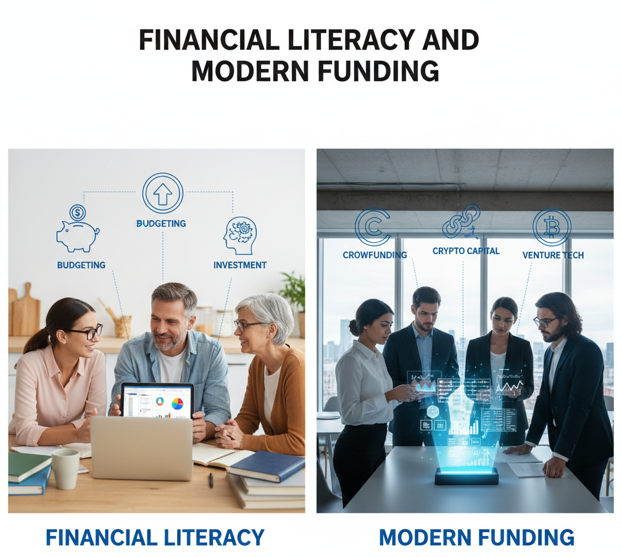
Modern business owners in 2026 need to understand not only traditional financing methods but also emerging funding channels shaped by digital platforms and AI-driven marketplaces. Financial literacy today goes far beyond simply reading a balance sheet—it involves understanding risk exposure, capital structure, cash flow dynamics, and choosing funding strategies that align with each stage of business growth.
Core Pillars of Financial Literacy:
Cash Flow Management: Closely tracking revenue timing, operating expenses, and financial runway is critical, especially in volatile or rapidly changing markets. Strong cash flow visibility helps leaders make confident short-term and long-term decisions.
Unit Economics: Successful businesses know their customer acquisition cost (CAC), customer lifetime value (LTV), and payback periods. These metrics determine whether growth is truly profitable or simply scaling losses.
Risk Management: Forward-thinking companies actively hedge against currency fluctuations, supply chain disruptions, regulatory changes, and technology-driven market shifts to protect long-term stability.
Crowdfunding
Crowdfunding has evolved from a niche fundraising method into a mainstream strategy for both product validation and early-stage capital. It enables businesses to raise funds directly from customers and engaged communities while simultaneously testing real product–market fit. Rather than relying solely on investors, founders can now gauge demand, refine their offerings, and build brand momentum before full-scale production.
Key Benefits:
Market Validation: A successful crowdfunding campaign provides strong proof of demand, reducing the risk of overproducing a product that the market may not fully embrace.
Community Building: Early backers often become loyal advocates who provide feedback, share the product organically, and help shape future improvements.
Non-Dilutive Funding Options: Reward-based crowdfunding models allow businesses to secure capital without giving up ownership or equity, which is especially valuable for early-stage startups.
Key Challenges:
High Marketing Intensity: Running a successful campaign requires compelling storytelling, consistent content production, and strong promotional efforts across multiple channels.
Operational & Delivery Pressure: Meeting promised timelines and maintaining product quality can be complex, particularly when demand scales faster than expected.
Venture Capital And “AI‑Capital”
Traditional venture capital remains powerful but in 2026 an emerging layer of “AI‑Capital” is shaping funding decisions.
Investors are increasingly:
- Using AI models to evaluate market team performance. Product traction and competitive landscapes.
- Looking for startups with defensible data moats proprietary models. Or unique integrations rather than generic AI features.
- Assessing responsible AI practices (fairness, transparency and governance) as risk factors.
Founders pursuing VC or AI‑enhanced funding must:
- Articulate a clear path to profitability or strategic value creation.
- Demonstrate how AI enhances their product in ways that are hard to replicate.
- Show mature data handling: consent, privacy, security and compliance.
Alternative funding: Such as revenue‑based financing. Tokenized assets and platform‑linked lending is emerging. But each comes with its own regulatory and risk profile. That leaders must understand before committing.
The Future Of Work: Remote 2.0 And The Agentic Workforce
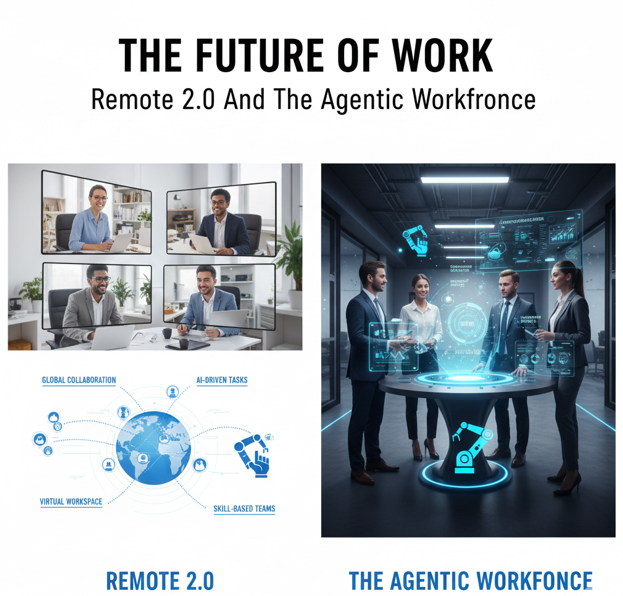
The first wave of remote work was reactive: Remote 2.0 is intentional, structured, and augmented with AI. Organizations now think in terms of “workflows” rather than “offices,”. And focus on output, collaboration quality and well‑being over physical presence.
Remote 2.0 And Hybrid Models
Modern work models are evolving along three main patterns:
- Fully remote: Distributed teams across time zones with asynchronous communication as the default.
- Hybrid: Core in‑office days for collaboration and culture with remote flexibility for deep work.
- Hub‑and‑spoke: Central offices in key regions complemented by smaller hubs close to talent clusters.
Success in these models depends on:
- Clear communication norms (response times, tools, meeting etiquette).
- Performance metrics that focus on outcomes instead of hours observed.
- Psychological safety and inclusion especially for remote employees who may feel isolated.
The “Agentic” Workforce
The emerging “agentic” workforce is defined by AI agents working alongside humans, taking responsibility for routine, data-heavy, and procedural tasks. Rather than replacing employees, well-designed agentic systems enhance human productivity by automating repetitive processes while keeping people in control of judgment and decision-making.
These AI agents can:
-
Handle repetitive tasks such as data entry, reporting, scheduling, and first-line customer support.
-
Generate insights and recommendations that humans can interpret, contextualize, and act upon.
-
Enable entirely new roles, including AI orchestrators, prompt engineers, and automation strategists who guide and optimize how AI is used across the organization.
For business leaders, the key strategic questions become:
-
Which workflows can be safely delegated to AI agents without compromising quality, ethics, or customer trust?
-
How should employees be trained to supervise, audit, and collaborate effectively with intelligent systems?
-
What governance frameworks ensure transparency, accountability, and regulatory compliance when AI contributes to decision-making?
Organizations that treat AI agents as collaborative partners—rather than opaque black-box tools—tend to achieve higher productivity, faster innovation cycles, and stronger employee acceptance of automation initiatives.
Marketing, Brand, And The Rise Of Personal Branding
Marketing in 2026 is dominated by algorithmic feeds. On creator economies and trust-driven purchasing. In this environment traditional corporate branding is no longer sufficient. Personal branding has become a durable moat for both individuals and organizations.

Why Personal Branding Matters
Personal branding is the strategic presentation of an individual’s expertise. The values and personality across public channels.
It matters because:
- People trust people more than logos, especially in high‑stakes decisions (B2B deals, healthcare, finance, legal services).
- Social platforms reward authentic. OR human voices over generic corporate messaging.
- Founders, executives and frontline experts can become distribution channels. For the company’s products and ideas.
Effective personal brands:
- Communicate a clear niche: (e.g., AI governance in healthcare, sustainable supply chains small‑business tax strategy).
- Share consistent valuable content aligned with audience needs.
- Maintain integrity between public messaging and actual behavior.
Corporate Brand As An Ecosystem Of Personal Brands
Modern companies are increasingly built as networks of visible experts:
- Leadership teams use thought leadership to shape industry conversations and policy.
- Subject‑matter experts publish content. Appear on podcasts and speak at events building trust.
- Employee advocacy programs encourage team members to share their work and insights online.
This strategy:
- Improves customer acquisition by shortening trust-building cycles.
- Helps recruitment by showcasing culture and talent.
- Enhances resilience because reputation is distributed rather than concentrated in a single channel.
The Phygital Marketplace
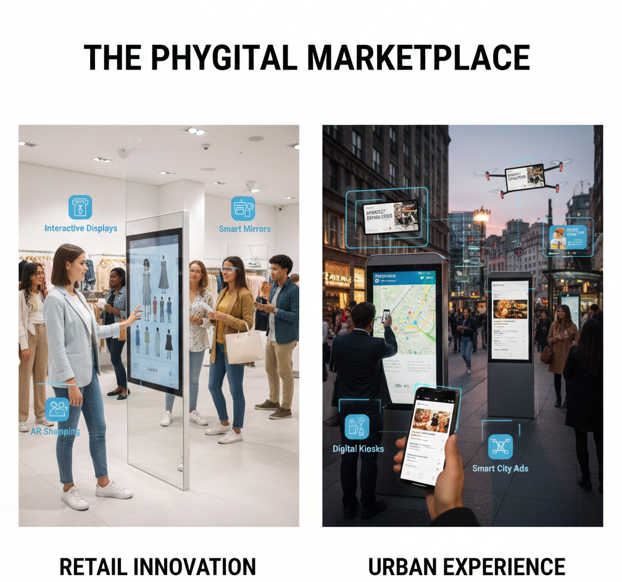
The modern marketplace is “Phygital”: A seamless blend of physical and digital experiences that customers perceive as a single journey. Businesses must design interactions that move fluidly between online platforms. Offline touchpoints and AI-augmented services.
Core elements of a Phygital strategy:
- Omnichannel presence: Integrated websites, apps, social platforms and in‑person experiences.
- Unified data: A single view of the customer that captures interactions across all channels.
- Real‑time personalization: AI models that adapt offers content and experiences from moment to moment.
Examples include:
- Retailers using AI to personalize in‑store recommendations based on online behavior.
- Service businesses offering virtual consultations that feed into in‑person engagements.
- B2B organizations combining digital demos with on‑site implementation support.
The underlying principle is continuity: customers should not have to repeat themselves or start from scratch. When they switch channels or contexts.
Sustainability and ESG as Profit Drivers
By the mid-2020s, Environmental, Social, and Governance (ESG) considerations have shifted from a “nice-to-have” initiative to a central pillar of business strategy. What once focused mainly on compliance and brand reputation has evolved into a powerful driver of risk management, capital allocation, and long-term customer loyalty.
ESG and Financial Performance
When implemented thoughtfully, ESG strategies directly influence both resilience and profitability:
-
Reduced Operational Risk: Improving energy efficiency, optimizing resource usage, and increasing supply chain transparency lower exposure to environmental and operational disruptions.
-
Greater Access to Capital: Many institutional investors now prioritize ESG-aligned portfolios, making responsible companies more attractive for funding.
-
Stronger Brand Loyalty: Customers increasingly support businesses that demonstrate measurable social and environmental impact.
Key ESG Dimensions
-
Environmental: Managing carbon footprint, reducing waste, adopting circular economy practices, and ensuring sustainable sourcing.
-
Social: Promoting fair labor practices, diversity and inclusion, community engagement, and strong product safety standards.
-
Governance: Ensuring board independence, executive accountability, anti-corruption policies, and transparent corporate reporting.
From Compliance to Competitive Advantage
Organizations that treat ESG as a strategic growth lever—rather than just a reporting requirement—tend to:
-
Innovate new products and services aligned with evolving regulations and consumer expectations.
-
Attract high-quality talent who prefer mission-driven and responsible employers.
-
Build resilience against climate-related, regulatory, and reputational risks.
In 2026, ESG is increasingly intertwined with AI governance. The way a company designs, trains, and deploys AI systems—avoiding bias, protecting privacy, and ensuring accountability—is now viewed as both a social responsibility and a core governance priority.
Building Trust in an AI-Integrated Economy
As AI becomes deeply embedded across finance, hiring, marketing, and operations, trust has emerged as the defining currency of modern business. Designing human-centric AI systems and maintaining transparent practices are essential for sustaining that trust.
Trust-Building Pillars
-
Explainability: Providing clear, understandable reasons behind AI-assisted decisions, especially in high-impact areas like lending, hiring, or healthcare recommendations.
-
Consent and Privacy: Respecting user data ownership, minimizing unnecessary data collection, and communicating transparently how data is used.
-
Human Oversight: Keeping humans involved in ethically sensitive or high-stakes decisions to ensure fairness, accountability, and contextual judgment.
Businesses that overlook these principles face not only regulatory penalties but also public backlash and long-term brand damage—risks that no amount of advanced technology can fully repair.
FAQs
1. What does “human-centric AI business” mean in 2026?
A human-centric AI business puts the people’s customers. Employees and communities at the core of its strategy. While using AI systems and technology to update with enhancement. Not for replacing human judgment and relationships. So the improvements of Its focuses on empathy transparency and long‑term trust rather than short‑term optimization alone.
2. How is AI changing small business vs. enterprise strategies?
AI allows small businesses to access capabilities that were once reserved for big enterprises. Such as advanced analytics like marketing automations and personalized customer management services. The enterprises meanwhile use AI programs to integrate complex systems. Optimize world operations and unlock value from the large data sets. But they also face heavier governance obligations.
In our experience using AI systems to manage our business like small store to big store. In the products manage and employees salary is easy to manage. If you can use the AI-mind in 2026 and you will succeed without much struggle.
3. What is “AI‑Capital” and how does it affect funding?
“AI‑Capital” refers to the use of AI tools by investors to evaluate markets, teams and progress. As well as to the growing preference for startups with strong AI Core infrastructure and data advantages. It affects funding by rewarding companies that use AI applied with responsibility and intent in ways that are difficult for competitors to copy.
Check that AI affects fund administration: AI technology enables fund administrators to create sophisticated tools that scrape, ingest, normalize and synthesize vast amounts of data. In the laying the foundation for more complex and detailed automation.
4. What is the “agentic workforce”?
The agentic workforce is a model where human-centric AI business employees collaborate with AI agents. That agents can execute tasks. Monitor workflows and make constrained decisions within defined rules. Humans remain accountable and provide context, creativity and ethical judgment. While that agents provide us speed, scale and precision. In simple words AI agents manage your working ability. Where you want to handle something like managing your online stores. OR social accounts and your business profiles. Now the world is too simple with artificial intelligence.
5. Why is personal branding so important for businesses now?
Personal branding builds trust faster than anonymous corporations. For messaging by putting real experts at the forefront of communications. Strong personal brands among founders, executives and specialists. They expand reach, reduce sales friction and make the company more resilient to platform changes and advertising costs.
By identifying your unique value and living in a way that promotes it. Definitely you can become known for your defining attributes. This Credibility can help you attract opportunities in your career and life that align with your Personal authenticity.
It can also have Operational benefits including:
- Stronger confidence in your financial and Strategic leadership skills.
- Well-defined goals and core values.
6. How does ESG improve profitability rather than just compliance?
ESG “environmental social and governance” can reduce costs (through efficiency and risk mitigation). They open access to new capital markets and strengthen brand loyalty. When embedded in strategy ESG drives innovation and helps businesses. They anticipate regulatory and consumer shifts instead of reacting to them.
The Proven Link Between ESG and Profitability
The latest data underscores a clear profitability edge for ESG engaged companies. Over the past three years (2022–2024) firms publicly prioritizing. ESG delivered average profit growth of 10.2 percent globally rising to 12.5 percent in the US. In Europe 9.3% and 8.7% in Australia outpacing (non ESG) peers by up to 4.1 percentage points, per McKinsey and NYU Stern analyses. This trend holds even stronger post 2024 with high ESG scorers. On showing 15% higher returns amid volatile markets.
7. What skills should business leaders prioritize in 2026?
Leaders should prioritize strategic thinking in an AI rich environment. The financial literacy, ethical decision making data informed management. In communication across remote/hybrid teams and the ability to build cultures of continuous learning and psychological safety.
Based on forecasts for 2026 business leaders should prioritize a blend of advanced technological proficiency and deeply human skills. To navigate an AI driven, hybrid, and volatile working environment. The core focus is on becoming “AI fluent” while fostering a resilient empathetic and highly collaborative culture.
8. How can a traditional brick‑and‑mortar business become “Phygital”?
A traditional business can become Phygital by building a strong digital presence. Like a website, e‑commerce and social. The integrating in stores and online data. They use AI tools for personalization and customer support. The goal is a seamless experience. Where customers move between channels without friction or loss of context.
-
A brick and mortar business operates physical locations like retail shops, factories or warehouses.
-
A phygital strategy blends physical and digital worlds.They use tech like VR and AR to create interactive customer experiences and boost engagement.